Water Leak Detection Cost in California: Methods, Prices and What the Report Should Tell You
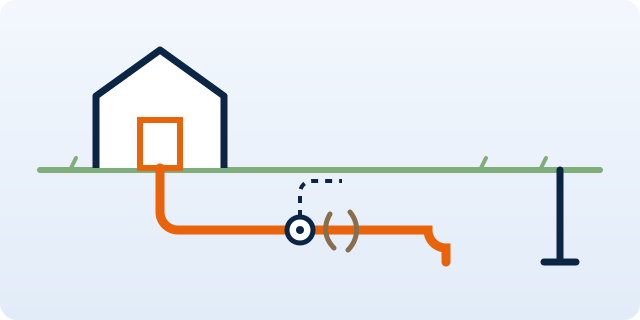
Leak detection is the rare plumbing service where you are paying almost entirely for information: where the water is going, through which pipe, under what part of the house. Priced and used well, a few hundred dollars of detection prevents thousands in exploratory demolition. Here is what it costs in California, what the different methods actually do, and what a proper detection report should hand you.
Typical leak detection prices
- Standard electronic leak detection visit: $150–$500 for most single-family homes.
- Slab leak location (pressurized line under concrete): $250–$800, sometimes credited toward the repair if the same company does both — see our slab leak repair cost guide.
- Complex cases (multiple leaks, pool plumbing, long yard runs needing tracer gas): $500–$1,500. Pool-specific pricing is covered in our pool leak guide.
The leak detection cost page breaks these ranges down further. Always ask whether the fee is flat or hourly, and whether it is credited against repair work.
How the methods work
Acoustic listening is the workhorse: pressurized water escaping a pipe produces a characteristic sound that ground microphones and listening discs can localize through slab and soil. This is established science, not marketing — research by Hunaidi and Chu at Canada's National Research Council, published in Applied Acoustics (1999), characterized exactly which frequencies leak noise travels at in water pipes and how far it propagates, work that underpins modern acoustic detection equipment (study on Google Scholar). Notably, they found leak sounds travel less far in plastic pipe than metal — one reason locating leaks in newer PEX systems can take longer.
Thermal imaging finds temperature anomalies — a hot-water slab leak warming a stripe of floor is a classic catch. Tracer gas (helium or hydrogen-nitrogen mix pumped into a drained line) pinpoints leaks acoustic methods miss, especially outdoors. Meter and pressure testing isolates which system leaks — a step you can partly do yourself before paying anyone, as described in our high water bill guide. And if the leak is between the street and the house, check our guide on who is responsible for meter-to-house leaks before assuming the bill is yours.
What the report should tell you
A professional detection visit should end with, in writing: which line leaks (hot or cold, supply or drain), the marked location to within a couple of feet, the evidence (acoustic reading, thermal image, pressure drop numbers), and repair options with prices — spot repair, reroute, or repipe. Be wary of a "detection" that skips straight to a five-figure repipe quote without localizing anything; that is a sales visit, not a diagnosis.
Detection pays for itself when it is independent
Getting detection results and then comparing repair bids keeps everyone honest. Homeowners in Pasadena, Antioch and Burbank compare licensed leak specialists on Plumber Comparator. Describe the symptoms — meter movement, warm floor, damp spot, unexplained bill — and request a free quote.
Need a plumber you can trust?
Tell us about the job — a licensed California plumber gets back to you with a real quote.
Get free quotesKeep reading
- Sewer Line Replacement Cost Per Foot in California: Trench, Trenchless and What Inflates the Bill
- Water Heater in the Garage: California Code Rules (18-Inch Rule, Bollards, Pans) and What Compliance Costs
- Electric Tankless Water Heater Cost in California: Why the Panel, Not the Unit, Decides the Price