Slab Leak Repair Cost in California: Spot Repair vs Reroute vs Repipe, Priced Honestly
For the big bills · $59California Homeowner Plumbing Pack33 chapters, read online: sewer line kit · slab leak and insurance claim kit with 3 letters · month-by-month maintenance calendar · Price Book (17 jobs, 145 cities) · Water Heater Kit. What's insideOne payment of $59 · instant access, receipt by email · for California homeowners
Get the pack · $59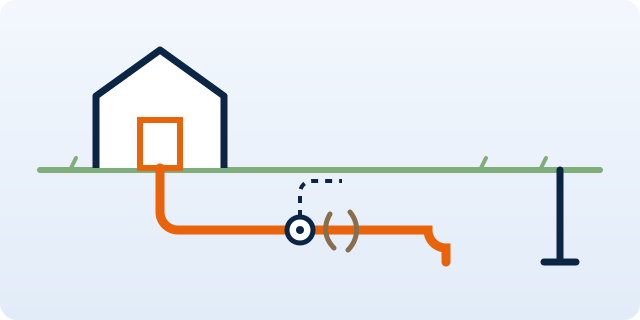
A slab leak — a pressurized water line leaking under the concrete slab your house sits on — is the plumbing diagnosis California homeowners dread most, partly because the internet quotes them everything from $500 to $20,000. Both numbers are real; they're just answers to different questions. The cost splits cleanly into two stages (find it, then fix it) and three fix strategies, and understanding which strategy fits your house is the difference between paying for a repair and paying for a project.
Stage one: finding it
Professional leak detection runs $150–$600 and is worth every dollar, because the alternative is exploratory jackhammering. Techs combine acoustic listening, pressure testing of hot and cold lines separately, and thermal imaging (hot-side leaks — the majority — warm the floor above them). The telltale signs that get you to this stage — a spinning water meter with everything off, warm floor patches, the sound of running water in silence — are covered in our slab leak signs guide, and an unexplained jump in the water bill is often the first clue.
Stage two: the three repair strategies
- Spot repair (jackhammer and fix): $500–$4,000. Open the slab at the located leak, cut out the bad section, repair, re-pour. Our slab leak cost page tracks this range. Cheapest today — but it fixes one point on a pipe that's failing for a reason, and it means demolition inside your living space, plus flooring repair that's often not in the plumbing bid.
- Reroute (abandon and bypass). Cap the failed line under the slab and run a new one overhead through walls and attic. No slab demolition, and it replaces the whole vulnerable run rather than one point. Typically costs more than a simple spot repair, far less than a full repipe; it's the sweet spot for a single failed line in an otherwise sound system.
- Whole-house repipe: $4,500–$15,000. When it's the second or third slab leak, the pipe material itself is the problem, and serial spot repairs are just prepaying for the repipe anyway. See repiping costs and our comparison of copper vs PEX.
Why California slabs eat copper
Most slab leaks in California are pinhole failures in soft copper laid under or in the slab from the 1960s through the 1990s. Corrosion research — notably the work of Marc Edwards and colleagues on the pitting corrosion of copper published in the Journal of the American Water Works Association (1994) — shows how water chemistry can drive localized pitting that perforates a pipe wall while the rest of the tube stays thick and healthy (see the study). That's exactly the failure pattern that makes spot repairs a gamble: the conditions that pitted the pipe at one point are acting on every foot of it. Our guide to copper pinhole leaks goes deeper on causes.
Insurance: partial help, with a catch
Most California homeowner policies cover the resulting damage (flooring, drywall, dry-out) and the access cost (tearing open and repairing the slab), but not the pipe repair itself — and multiple slab leak claims can affect your insurability. Document everything from day one and read our water damage insurance claims guide before you file.
Get local pricing
Slab leak searches spike in exactly the markets our data shows — Corona, Chino Hills, Fairfield — all tract-home country with decades-old copper under slab. Describe your symptoms on Plumber Comparator and request a free quote; a licensed plumber should walk you through all three strategies, not just the one they prefer to sell.
Need a plumber you can trust?
Tell us about the job — a licensed California plumber gets back to you with a real quote.
Get free quotes