How Much Water (and Money) Does a Leak Waste in California?
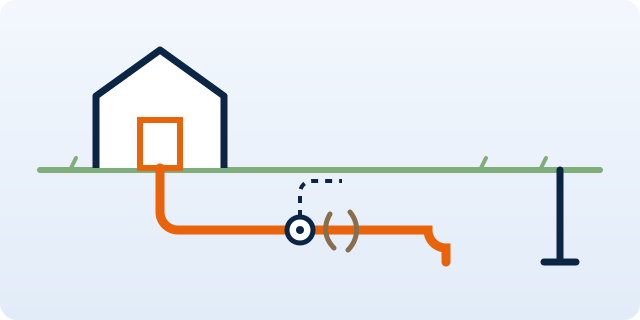
"It's just a little drip" is one of the most expensive assumptions a California homeowner can make. Small, steady leaks waste far more water than their size suggests, and in a drought-prone state with rising water rates, that waste shows up on your bill and in the strain on a stretched supply. This guide puts real numbers to common household leaks so you can decide what's worth fixing now — and it is almost always more than people expect.
What common leaks actually waste
- A dripping faucet at one drip per second wastes on the order of 3,000+ gallons a year — thousands of gallons from a leak you can cover with a fingertip.
- A running toilet, where the flapper doesn't seal, is the household heavyweight: a silent leak can waste hundreds of gallons a day, easily tens of thousands of gallons over the months it often goes unnoticed.
- A hidden pipe or slab leak runs 24/7 and can waste even more, often discovered only through a jump in the water bill or a warm/damp spot on the floor.
- An irrigation or outdoor leak hides underground and can quietly waste large volumes through a whole watering season.
Nationally, household leaks are estimated to waste around a trillion gallons of water a year — an aggregate that's really just millions of homes each losing "just a little." The point is that small leaks don't stay small in total.
What that costs you
The dollar cost depends on your local water rate and tier structure, and California's tiered pricing works against leaks specifically: a leak pushes your usage into higher-priced tiers, so the wasted water often bills at a premium rate rather than the base one. A running toilet can add tens of dollars a month; a hidden leak that runs for a full billing cycle before you notice can add a genuinely painful line to the bill. If your bill has jumped without an obvious reason, our high water bill and hidden leak guide walks through finding the source, and the dripping faucet and running toilet repair guides cover the two cheapest, most common culprits.
Why leaks cost more than the water alone
The bill understates the true cost, because moving water takes energy. A peer-reviewed study by Andrew Colombo and Bryan Karney, published in 2002 in the Journal of Water Resources Planning and Management, analyzed the energy and costs of leaky pipes and showed that leakage is costly not only in lost water but in the energy consumed to pump and pressurize water that never reaches a useful end — a hidden burden that compounds the visible waste (study on Google Scholar). In a state that spends enormous amounts of energy moving water across long distances, every gallon lost to a leak carries an energy and carbon cost on top of what you pay for the water itself.
Why it matters more in California
- Drought and supply pressure. California cycles through serious droughts, and conserved household water eases demand on reservoirs and groundwater during the dry years — see our drought water-saving plumbing guide.
- Tiered rates. Leaks push usage into higher pricing tiers, so the waste bills at premium rates.
- Damage risk. A hidden leak doesn't just waste water — it rots framing, feeds mold, and undermines slabs, turning a cheap fix into an expensive repair the longer it runs. Our leak detection cost page and slab leak repair page cover finding and fixing the ones you can't see.
What to do about it
- Do the meter test. With every fixture off, watch your water meter for 30 minutes — if it moves, water is escaping somewhere.
- Chase the cheap ones first. A flapper or a faucet cartridge is often a low-cost DIY or a short plumber visit that pays for itself fast in avoided waste.
- Get hidden leaks located, not guessed. For a suspected slab or underground leak, professional leak detection pinpoints the spot before anyone opens a wall or slab.
If your bill has climbed or you suspect a hidden leak, request a free quote and compare licensed plumbers serving San Jose, Sacramento, and Long Beach — the sooner a leak is found, the less water, money, and damage it costs you.
Need a plumber you can trust?
Tell us about the job — a licensed California plumber gets back to you with a real quote.
Get free quotes