Sprinkler & Irrigation Leak Repair Cost in California
For the big bills · $59California Homeowner Plumbing Pack33 chapters, read online: sewer line kit · slab leak and insurance claim kit with 3 letters · month-by-month maintenance calendar · Price Book (17 jobs, 145 cities) · Water Heater Kit. What's insideOne payment of $59 · instant access, receipt by email · for California homeowners
Get the pack · $59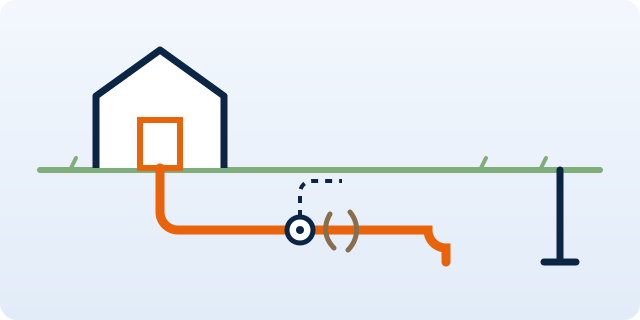
A soggy patch of lawn that never quite dries out, a water bill that jumped without any obvious cause indoors, a valve box that gurgles long after the sprinklers should have shut off — irrigation leaks are some of the easiest plumbing problems to ignore, because the damage happens outside, underground, on a system most homeowners never look at unless a head is visibly spraying sideways. That's exactly why they're expensive to ignore: an irrigation system runs on the same pressurized supply as the rest of the house, and a leak in it counts against your water bill exactly like a leak under the kitchen sink. Here's what repairs typically cost in California, what's actually failing, and when the job crosses from a landscaper's task into a licensed plumber's.
What repairs typically cost
Most irrigation leak repairs in California run $100–$400, covering the common failures: a cracked sprinkler head, a broken riser, a leaking solenoid valve, or a split fitting at a joint. Underground pipe leaks — a cracked PVC or polyethylene lateral buried under the lawn — typically cost $150–$400 or more to excavate and repair, with price climbing when the break sits under a walkway, driveway, or mature landscaping that has to be worked around carefully. Most irrigation companies charge a $50–$150 service call or minimum, similar to plumbers, so bundling several known problems (a broken head here, a stuck valve there) into one visit is worth asking about. A full valve manifold replacement, or a system old enough that several zones are failing at once, can push a job toward $600–$1,000 or beyond.
How much water a hidden leak actually wastes
Irrigation leaks waste water at a scale that surprises most homeowners. A leak the diameter of a dime in a pressurized line can lose thousands of gallons a month, and a single broken or misaligned sprinkler head left unnoticed can waste on the order of tens of thousands of gallons over a year — all of it billed at your water utility's normal (and in many California districts, tiered) rate. Because irrigation typically runs on a timer overnight while everyone is asleep, a cracked line or a valve that won't fully close can pour water into the ground for months before anyone connects it to the bill. See our hidden leak cost guide for how to rule out indoor plumbing first, and check the meter test described there — if it shows a leak but every indoor fixture is dry, the irrigation system is the next place to look.
The scale of the problem across California's landscape irrigation isn't just anecdotal. A peer-reviewed study by Yang, Oki, Sisneroz, Haver and Pitton, published in the journal Heliyon (2023), analyzed residential runoff data from low-density neighborhoods across two California droughts and found that local landscape irrigation regulations meaningfully reduced daily runoff volume and peak flows once enacted — direct evidence of how much water outdoor irrigation was wasting to begin with, largely through overwatering, poor scheduling and system leaks, before those rules tightened enforcement (read the study). The same researchers and others in this literature generally put system leaks, broken heads and overwatering together as the source of 30–60% of all water applied to residential landscapes — a number that tracks closely with what irrigation contractors find once they actually dig up a yard.
The most common failure points
- Cracked or knocked-over sprinkler heads — the most frequent call, usually from a mower, a car tire, or simple age and UV exposure. A pop-up head that stays stuck up, sprays at the wrong angle, or leaks around its base when the zone is off is a $75–$200 swap.
- Solenoid valve failure — the electric valve at the manifold that turns each zone on and off. A valve that won't fully close lets water seep out of the lowest heads on that zone long after the controller shuts off, and a diaphragm or solenoid replacement typically runs $100–$300 per valve.
- Underground lateral breaks — a cracked pipe between the valve and the heads, often caused by root intrusion, ground settling, or a hard freeze in colder inland areas. These show up as a wet spot, unexplained low pressure on one zone, or water surfacing somewhere with no head nearby, and repair means locating the break and excavating a small section of pipe.
- Drip irrigation line failures — the thin polyethylene tubing and emitters common in drought-tolerant landscaping crack with UV exposure and rodent damage more than they burst under pressure; failures are usually cheap and fast to patch once found, but a leak hidden under mulch can run a long time before it's noticed.
Backflow and the connection to your drinking water
Every irrigation system that ties into a home's water supply is required to have a backflow prevention assembly — a small device that stops water sitting in sprinkler lines (which can carry fertilizer, pesticide residue or standing bacteria) from ever being siphoned backward into the household's clean water. Most California water districts require these assemblies to be tested annually by a certified tester, and a leak repair is a sensible moment to have that test done in the same visit rather than as a separate trip. Our backflow preventer testing guide covers what the test involves, what it costs, and why districts treat it as a compliance requirement rather than a suggestion — because if that assembly is also failing, it's not just a landscaping issue.
When it's a landscaper's job — and when it's a plumber's
Most sprinkler head swaps, drip emitter fixes and even solenoid valve replacements are squarely within a licensed irrigation contractor or landscaper's normal work, and many California homeowners handle simple head replacements themselves with parts from any hardware store. A licensed plumber becomes the right call once the problem is on the house side of the equation: the backflow assembly itself needs repair or replacement, the leak is actually inside the main supply line feeding the irrigation system (rather than downstream of the valve manifold), or the irrigation tie-in is old enough that it lacks a proper backflow device at all — a code issue, not just a leak. If a leak detection specialist or plumber traces a mystery water-bill spike to the yard rather than the house, they'll typically hand the actual sprinkler repair to an irrigation contractor, but confirm the backflow assembly and the point where irrigation taps into your home's plumbing are both sound before calling the job done.
Cutting outdoor water use overall
A repaired leak stops active waste, but it's also worth looking at the system as a whole. Smart irrigation controllers that adjust watering to weather and season, swapping spray heads for drip lines in planting beds, and seasonal shutoffs before winter rains all reduce the baseline draw on top of whatever a leak was adding — our drought-smart plumbing guide walks through those upgrades and the rebates several California water districts offer for making them.
Get it diagnosed and fixed
If your water bill has climbed and the yard has a damp spot that won't dry, don't wait for the sprinkler head to fail visibly — homeowners in Sacramento, Anaheim, and Stockton most often catch irrigation leaks through exactly that combination of symptoms. Describe what you're seeing on Plumber Comparator and request a free quote — a licensed local plumber can confirm whether the leak sits on the house side of the backflow assembly or downstream in the irrigation system itself, and point you to the right contractor for whichever it turns out to be.
Need a plumber you can trust?
Tell us about the job — a licensed California plumber gets back to you with a real quote.
Get free quotes