Smart Water Leak Detectors & Automatic Shutoff Valves: Cost and Are They Worth It in California?
For the big bills · $59California Homeowner Plumbing Pack33 chapters, read online: sewer line kit · slab leak and insurance claim kit with 3 letters · month-by-month maintenance calendar · Price Book (17 jobs, 145 cities) · Water Heater Kit. What's insideOne payment of $59 · instant access, receipt by email · for California homeowners
Get the pack · $59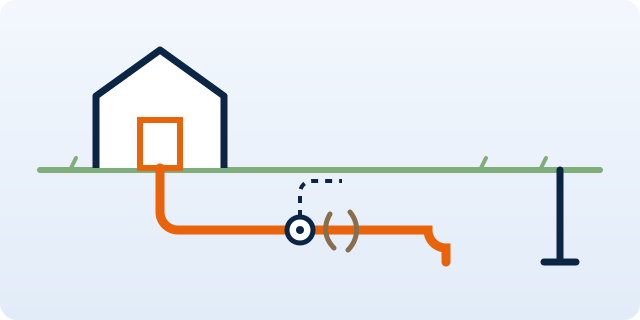
Water damage is the kind of claim insurers dread and homeowners rarely see coming: no fire, no storm, just a supply line or a washing machine hose that let go while nobody was home. That's pushed a wave of "smart home" plumbing hardware onto the market — from $30 sensors that just beep to whole-house systems that shut the water off automatically before a small leak becomes a flooded floor. Here's what each type actually costs installed in California, which ones insurers actually give you credit for, and how to figure out which tier makes sense for your house.
Two very different product categories
"Smart leak detector" gets used loosely to describe two different things, and mixing them up is the most common shopping mistake:
- Point-of-use leak sensors. Small battery-powered pucks placed under sinks, behind toilets, near the water heater, or by the washing machine. They detect standing water and send a phone alert — nothing more. They don't stop the water; they just tell you faster than a puddle would.
- Whole-house automatic shutoff systems. A smart valve installed on the main water line, paired with flow sensors or leak detectors throughout the house. When it detects a leak — either standing water at a sensor, or a flow pattern that looks like a burst pipe (continuous flow with no fixture in use) — it shuts the main valve automatically, stopping the leak at the source even if nobody's home.
They solve different problems at very different price points, so the right choice depends on what you're actually trying to protect against.
Point sensors: cheap, DIY, alert-only
A single point sensor typically costs $20-$60, and multi-packs bring the per-unit price down further. Installation is genuinely DIY — most just sit on the floor or clip in place, connect to home WiFi, and start monitoring in a few minutes with no plumber required. For a modest outlay of $100-$300, a homeowner can cover the highest-risk spots: under every sink, behind the toilet, next to the water heater, and by the washing machine — the locations responsible for most slow, undetected household leaks.
The tradeoff is right there in the name: these devices detect and alert, they don't act. If a supply line lets go while you're at work or on vacation, a point sensor texts you, but water keeps flowing until you get home or call someone to shut the main valve manually. They're a good, cheap first step, but they don't prevent the worst-case scenario the way a shutoff system does.
Whole-house automatic shutoff systems: the real cost
This is where a licensed plumber typically gets involved, and where the price jumps. Budget for two separate line items:
- The smart valve device itself, which mounts on the main line and includes flow monitoring and remote shutoff: commonly $400-$600 for the hardware alone.
- Professional installation, since the valve ties into the main supply line the same way a standard shutoff valve replacement would: typically $300-$700 in labor, more if the main line is hard to access or needs modification to fit the device.
Put together, a professionally installed whole-house system typically runs $700-$1,300 in most California homes, occasionally higher on a difficult install. Because this work modifies the main supply line, it's the same category of job as a standard leak detection or valve replacement call, and many California jurisdictions want a permit for it — see our guide to plumbing permits in California for how that generally works locally. Adding wireless flow/leak sensors at other fixtures throughout the house — recommended, since the main valve alone only catches leaks large enough to show up in whole-house flow data — typically adds another $150-$400 for a handful of sensors.
Do insurers actually give a discount for these?
Often, yes, though it varies by carrier and isn't automatic. A number of major homeowners insurers offer premium discounts for approved leak-detection and automatic shutoff devices, commonly in the range of a few percent for a basic sensor setup up to something more meaningful for a monitored, whole-home shutoff system. The dollar savings on a typical California homeowners premium are modest on their own — often well under $150 a year — so the discount alone rarely justifies a whole-house system's cost. What it does do is shave a year or more off the payback period when you count it alongside the damage a shutoff system actually prevents. Two things matter before buying with the discount in mind: confirm with your specific insurer, in writing, that the device you're considering actually qualifies (not every smart valve brand is on every insurer's approved list), and get the discount added to your policy after installation — it's rarely applied automatically just because you bought the hardware.
Where the real value is: what a burst pipe actually costs
The case for a shutoff system isn't really about the insurance discount — it's about avoiding the claim in the first place. A supply line failure that runs undetected for even a few hours while a home is empty routinely causes flooring, drywall, and cabinetry damage running into the tens of thousands of dollars, on top of the plumbing repair itself; see our guide to water damage insurance claims in California for what a claim like that typically involves. An automatic shutoff valve doesn't prevent the pipe from failing — the underlying plumbing problem still needs a licensed plumber — but it caps the damage at a few gallons instead of a flooded first floor, which is the entire point for houses that sit empty for stretches: vacation homes, rental properties, or households that travel often.
Who should prioritize a whole-house system
A few kinds of California homes get outsized value from the whole-house tier over point sensors alone:
- Homes with known risk factors — older polybutylene or galvanized supply lines, a history of slab leaks, or a home that hasn't been repiped in decades.
- Vacation homes and rental properties that sit unoccupied for days or weeks, where a slow leak has the most time to turn into serious damage before anyone notices.
- Homes above finished living space — a condo or a two-story house where a leak on an upper floor damages the unit or room below, multiplying the cost of any delay.
- Anyone who's already had one significant water-damage claim, since carriers pay close attention to repeat claims and a documented shutoff system can help both the premium and the underwriting conversation at renewal.
For a typical owner-occupied home with nobody often away for long stretches, a batch of point sensors at the highest-risk fixtures, combined with the habit of checking your water bill for the signs of a hidden leak, covers most of the same risk for a fraction of the cost. The whole-house system earns its price mainly when a leak going undetected for hours or days is a realistic scenario, not a remote one.
Weighing a smart shutoff system, or dealing with a leak a sensor already caught, in Sacramento, Oakland, or anywhere else in California? Describe your situation on Plumber Comparator and request your free quote — a licensed local plumber can size and install a shutoff system correctly on your main line, or fix the leak a sensor already found.
Related topics
These topics used to have their own pages; their key facts and figures are gathered here.
| Topic | In short |
|---|---|
| Smart Water Leak Detectors & Automatic Shutoff Valves in California | What smart water leak sensors and whole-house automatic shutoff valves cost installed in California, whether they need a permit, and which insurers actually give a discount for having one. |
Smart Water Leak Detectors & Automatic Shutoff Valves in California
Most homeowners find out about a slow leak the expensive way: a warped floor, a moldy cabinet, or a water bill that quietly doubled over three months. According to the EPA's WaterSense program, the average American household loses nearly 10,000 gallons a year to leaks that go unnoticed, and about 10% of homes have a leak severe enough to waste 90 or more gallons a day. A smart leak detector — or its more capable cousin, the whole-house automatic shutoff valve — is built to catch that kind of problem in minutes instead of months. Here's what these devices actually cost installed in California, what they require, and whether the insurance discount everyone mentions is real.
- Standalone leak sensor pucks — small battery-powered discs you place under sinks, next to the water heater, behind the washing machine, or near the sump pump. They detect moisture and send a phone alert; they do not shut anything off. These run roughly $15–$45 per unit, often cheaper bought in multi-packs, and installation is peel-and-stick — no plumber needed.
- Whole-house smart shutoff systems — a device that tees into your main water line, monitors flow in real time, and automatically closes the valve when it detects a pattern consistent with a burst pipe, a running toilet left unattended, or a leak beyond a threshold you set. Popular models (Flo by Moen, Phyn Plus, and similar) run roughly $499–$850 for the device alone, before installation.
Study cited: doi:10.1111/rmir.70025, doi:10.3390/w16202975
Need a plumber you can trust?
Tell us about the job — a licensed California plumber gets back to you with a real quote.
Get free quotes