Drain Flies (Sewer Gnats): What They Mean About Your Plumbing and How to Get Rid of Them
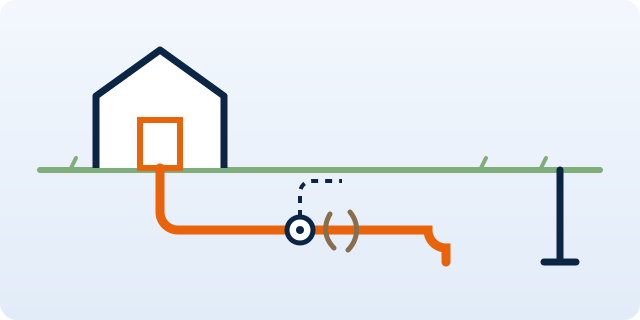
Tiny, fuzzy, moth-like flies loitering on the bathroom wall, always near a sink or shower: drain flies (also called sewer gnats or moth flies). They don't bite, they fly badly, and they're easy to squash — which is why most people ignore them for weeks. But drain flies are never random. They breed in one specific thing: the gelatinous film of bacteria and organic gunk coating the inside of a drain that isn't moving enough water. Find the film, and you've found the flies — and sometimes, a plumbing problem that was going to surface anyway.
What they are and why they're in your house
The common indoor drain fly is Clogmia albipunctata, a moth fly whose larvae live in the slime layer inside drains, overflow passages, and traps. The adults barely travel — if you're seeing them in a bathroom, the breeding site is almost always within a few feet. And they're more than a nuisance in principle: because the adults walk on drain slime and then on your surfaces, they can carry what the slime carries. A study by Faulde and Spiesberger published in the Journal of Hospital Infection in 2013 documented moth flies acting as mechanical vectors of bacterial pathogens in German hospitals, which is exactly why hospitals treat drain fly outbreaks as a hygiene event rather than a curiosity (study on Google Scholar). A home isn't a hospital, but flies breeding in sewage film and landing on toothbrushes is a solvable problem worth solving.
Find the source drain
- The tape test: cover each suspect drain overnight with clear tape, sticky side down, leaving a gap for airflow. The drain that produces flies stuck to the tape is your breeding site.
- Think "slow and rarely used": guest bathroom shower, laundry standpipe, floor drain in the garage, the overflow hole of a bathroom sink, a rarely used tub. Chronic slow drains grow the thickest film — the same drains flagged in our slow bathtub drain guide.
- A dry trap is the other classic: a P-trap that's evaporated in an unused bathroom lets sewer air (and flies) straight up from the line — the mechanism behind many sewage smells in bathrooms. Run water weekly in unused fixtures.
What actually works
- Physically remove the film. This is the whole game. Remove the stopper, scrub the first foot of the drain and overflow with a stiff drain brush, then flush with hot water. An enzyme or bacterial drain gel used per label for several consecutive nights digests what the brush can't reach.
- Kill the adults if you like (they die out in days once breeding stops) — but spraying insecticide down the drain without removing the film fixes nothing; the larvae live protected inside the slime.
- Bleach and boiling water mostly disappoint: a splash of bleach slides past the film, and boiling water can stress PVC and does nothing for the overflow passage. Our drain home remedies guide sorts the folklore from the fixes.
- Persistent reinfestation = deeper film. When flies return after honest scrubbing, the biofilm extends beyond arm's reach and a plumber's drain cleaning ($150–$500 typical) or, for whole-line buildup, hydro jetting clears the pipe walls the way no gel can.
When drain flies signal a real plumbing problem
A cloud of flies with no findable indoor source is worth taking seriously: flies breeding under the house point to a broken or leaking drain line, a compromised sewer lateral, or standing sewage in the crawl space — conditions that also produce gurgling drains and odor. That's no longer an insect question; it's a camera inspection question, and finding it early is dramatically cheaper than finding it after the soil under the bathroom washes out.
Scrub first — it fixes most cases for the cost of a $10 brush. If the flies outlast your effort, or the smell suggests something bigger than a slimy trap, request a free quote from a licensed plumber and get the actual source diagnosed rather than treated cosmetically.
Need a plumber you can trust?
Tell us about the job — a licensed California plumber gets back to you with a real quote.
Get free quotes