Smart Water Leak Detectors & Automatic Shutoff Valves in California: Cost, Installation, and Insurance Discounts
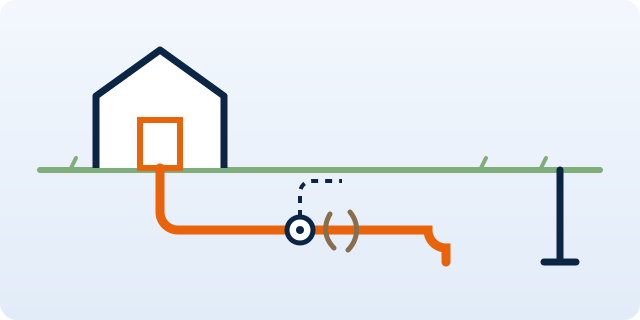
Most homeowners find out about a slow leak the expensive way: a warped floor, a moldy cabinet, or a water bill that quietly doubled over three months. According to the EPA's WaterSense program, the average American household loses nearly 10,000 gallons a year to leaks that go unnoticed, and about 10% of homes have a leak severe enough to waste 90 or more gallons a day. A smart leak detector — or its more capable cousin, the whole-house automatic shutoff valve — is built to catch that kind of problem in minutes instead of months. Here's what these devices actually cost installed in California, what they require, and whether the insurance discount everyone mentions is real.
Two very different categories, two very different prices
"Smart leak detector" gets used loosely, but there are really two products on the market, and confusing them leads to the wrong purchase.
- Standalone leak sensor pucks — small battery-powered discs you place under sinks, next to the water heater, behind the washing machine, or near the sump pump. They detect moisture and send a phone alert; they do not shut anything off. These run roughly $15–$45 per unit, often cheaper bought in multi-packs, and installation is peel-and-stick — no plumber needed.
- Whole-house smart shutoff systems — a device that tees into your main water line, monitors flow in real time, and automatically closes the valve when it detects a pattern consistent with a burst pipe, a running toilet left unattended, or a leak beyond a threshold you set. Popular models (Flo by Moen, Phyn Plus, and similar) run roughly $499–$850 for the device alone, before installation.
The puck sensors are cheap insurance for known trouble spots — under an aging water heater, for instance, alongside a proper drain pan — but they only tell you a leak already happened. A whole-house system is the only version of this technology that actually stops the water.
Installed cost of a whole-house system in California
Because a flow-based shutoff system cuts into the main supply line, it's a job for a licensed plumber, not a weekend project — even though the device itself is designed for a relatively quick install once your main line is exposed and accessible. Between the hardware and professional labor, homeowners commonly end up around $1,500–$2,000 installed for a typical single-family home, more if the main line is hard to access or needs re-piping to fit the device. That's a meaningful jump from a $150–$300 standard leak-detection service call, but the two solve different problems: a professional leak-detection visit finds a leak that already exists, while a smart shutoff is there to catch the next one automatically, at any hour, whether you're home or not.
If you don't already know where your main shutoff valve is, that's worth fixing before anything else — our main water shutoff valve guide covers where to find it and what it costs to replace if it's seized or missing.
Do you need a permit?
It depends on your city, and the honest answer is "check first" rather than assuming either way. Some California jurisdictions — Los Angeles is one — exempt straightforward shutoff-valve repair and replacement work from permitting under the local plumbing code. Other cities require a permit whenever work involves cutting into the main supply line, regardless of what's being installed. Because the rules genuinely vary by municipality, ask your plumber to confirm before the job starts; a licensed contractor working in your city will know the local requirement immediately, and getting it wrong can complicate things later if you ever sell the home and disclosure comes up (see our pre-listing inspection guide for how unpermitted work tends to surface at that stage).
Do insurers actually give a discount?
Yes — this isn't just marketing copy from the device makers. Several major insurers operating in California have documented discount or eligibility programs tied to smart leak-detection and automatic shutoff technology. State Farm offers policy discounts, commonly cited in the 3%–10% range, for homes with an approved automatic shutoff device, and — notably for California specifically — has gone further on higher-value homes: for properties insured at $2 million to $4 million in replacement cost, State Farm has made an automatic smart shutoff device a condition of eligibility rather than an optional discount, which signals how seriously insurers treat undetected water loss as a claims driver in this state. Farmers Insurance runs a similar leak-detection and shutoff incentive program, and Mercury Insurance, a California-based carrier, has its own water leak detection program as well. Discount availability and amount vary by insurer, by policy, and by which specific device you install, so the only way to know your actual number is to call your carrier and ask what device model qualifies before you buy one.
Does the technology actually work?
The underlying research says yes, and it's a genuinely active area of study, not just vendor claims. A 2025 systematic literature review in the Risk Management and Insurance Review by Cimbru, Wagner, and Zeier Röschmann examined the growing body of evidence on IoT-enabled risk prevention — including connected water sensors — and found consistent documentation that continuous monitoring reduces both the frequency and severity of the claims that follow, which is the same logic behind insurer discount programs (study on Google Scholar). Separately, a 2024 bibliometric review published in the journal Water by Farah and Shahrour analyzed roughly 600 published studies on leak-detection methods and technology between 2000 and 2023, tracking how detection approaches — including the flow-anomaly sensing whole-house shutoff systems rely on — have matured and where the remaining gaps are (study on Google Scholar).
Who should actually buy one
Puck sensors under every sink and near the water heater are a low-cost, no-brainer add for any home — a $15–$45 device that might catch a slab leak's early warning signs (see our slab leak signs guide) before it reaches the point of tearing up a floor. A whole-house automatic shutoff system makes the most sense for homes that are frequently unoccupied — vacation properties, homes with owners who travel often, or rentals — where nobody would be there to notice a burst pipe for days, and for homeowners whose insurer offers a real premium discount that offsets part of the install cost over a few years. If your home already had a water-related insurance claim, ask your carrier directly whether a specific shutoff model would help your renewal terms; some carriers have gotten specific about which devices they recognize.
Not sure whether your situation calls for sensor pucks, a full shutoff system, or just a professional leak check first? Request a free quote from a licensed California plumber, or find one serving your area from your city page — homeowners in San Jose, Fresno, and Anaheim use the same process to get a straight answer on what's worth installing.
Need a plumber you can trust?
Tell us about the job — a licensed California plumber gets back to you with a real quote.
Get free quotes