Splitting Your Lot Under SB 9 in California: Why Water and Sewer Cost More Than an ADU
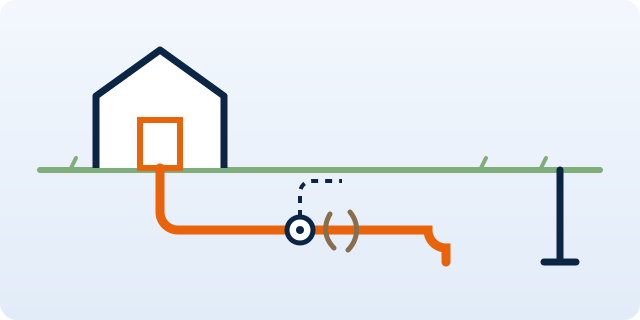
California's SB 9, in effect since January 1, 2022, lets eligible homeowners do something that used to require a full subdivision process: split one single-family lot into two separate legal parcels, each of which can then carry up to two homes. On paper it looks like the ADU route, just bigger — build a second structure, get a permit, done. In practice, the two paths diverge hard the moment a water or sewer line gets involved, and that divergence is exactly where SB 9 lot-split budgets tend to blow past what homeowners expected.
What SB 9 actually allows
Two separate tools sit inside SB 9, and it matters which one you're using. The first lets a homeowner add a second unit to an existing single-family lot without splitting anything — closer in spirit to an ADU. The second, the urban lot split, lets that same lot be divided into two new legal parcels, each large enough on its own (commonly a minimum around 1,200 square feet, with each new parcel required to keep at least 40% of the original lot's street frontage) to then carry up to two units apiece — up to four homes total on what was one lot, approved ministerially rather than through a discretionary hearing. Setbacks are capped modestly (typically no more than about four feet on the sides and rear for new construction), and homes near a major transit stop can skip the parking requirement entirely. The lot-split path also comes with two conditions the two-unit-only path doesn't: the applicant generally has to sign an affidavit intending to occupy one of the resulting homes for at least three years, and short-term rental use of either unit is off the table during that window.
The distinction that decides your utility budget
An ADU added to your existing lot is still, legally, the same parcel it always was — which is why many California water and sewer districts let it tie into the house's existing meter and lateral, sized up if needed. Our ADU plumbing requirements guide covers when that shared-service option is available versus when a separate ADU meter gets required anyway. A completed SB 9 urban lot split is a different animal: it creates a genuinely new legal parcel with its own address, and most California cities and water districts apply the same rule to it that they apply to any newly created lot in a standard subdivision — each parcel gets its own metered water service and its own sewer lateral tied into the public main, not a shared connection running through the neighboring parcel. This isn't a statewide rule written into SB 9 itself — the bill is silent on utilities — but it shows up consistently across the city and water-district ordinances that implement it, because it's how those agencies already treat every other legal lot split. Confirm it with your specific water district before you finalize a budget, but plan for two full connections, not one connection plus a branch line.
What that second connection actually costs
This is where the numbers move. A water agency's tap and capacity fee for a new connection — the one-time charge for physically tying into the main and paying the new parcel's share of treatment and storage capacity — ranges enormously by jurisdiction, from under $1,000 in some smaller inland districts to $50,000 or more in built-out coastal cities with steep capacity fees; our water service tap fee guide breaks that range down by meter size. On top of the agency's fee, a licensed plumber or underground contractor still has to trench the private-side line from the new meter to the new structure — typically $1,500–$6,000 depending on distance and what's in the way — and if the existing sewer lateral can't be shared, running a brand-new lateral all the way to the main commonly lands in the $5,000–$25,000+ range, similar to a full sewer line replacement. Our ADU plumbing cost guide walks through that same trenching math for a shared-lot scenario; a lot split's numbers track the higher end of it, doubled by the fact that both parcels typically need their own service rather than one house feeding a backyard unit.
The easement question nobody budgets for
Urban lot splits often produce one parcel that fronts the street and a second one behind it, reached only by a shared driveway or access easement. If the rear parcel's new water and sewer lines have to physically cross the front parcel to reach the main — because that's the only practical route — the two owners (even if it's the same person during the transition) need a recorded utility easement covering that trench, not just a driveway easement. This is a legal step as much as a plumbing one, and it's worth raising with your surveyor or civil engineer at the parcel-map stage, before a contractor shows up expecting a clear path to dig. Skipping it is how a straightforward trenching job turns into a title problem discovered at resale.
Get the utility scope confirmed before you record the map
The single most useful thing a homeowner can do early is call the water district and the sewer agency — not just the planning department — and ask directly whether the specific lot split will require two new services or whether an existing connection can be shared or upsized. Public works and utility staff see SB 9 applications constantly at this point and can usually tell you the fee schedule and lateral requirement for your address in one phone call, well before you've paid for engineering drawings built around the wrong assumption. Research from UC Berkeley's Terner Center for Housing Innovation on early SB 9 implementation has consistently pointed to permit and utility connection costs — not the building itself — as one of the biggest reasons lot splits have moved slower than the law's backers expected (Terner Center research on Google Scholar); getting the utility number right at the start is the difference between a project that pencils out and one that doesn't.
Questions worth asking before you commit
- Does my water district require a separate meter and tap fee for the new parcel, or can the existing service be upsized and shared?
- Does the existing sewer lateral have capacity for a second household, verified by a camera inspection, or does the new parcel need a full new lateral to the main?
- If the new parcel is landlocked behind the other one, is a recorded utility easement already in place for the trench route?
- What is the current combined fee estimate from the water and sewer agencies, in writing, before the parcel map is finalized?
Price the utility work with someone who has done this before
A lot split lives or dies on the utility math more than the framing. Homeowners in Fremont, Riverside, and Elk Grove use Plumber Comparator to get licensed local plumbers to scope the water and sewer connections for an SB 9 project before the parcel map is even final. Request a free quote and describe the lot split, including whether the new parcel fronts the street or sits behind the existing house — that detail alone changes the whole bid.
Need a plumber you can trust?
Tell us about the job — a licensed California plumber gets back to you with a real quote.
Get free quotes