Mini-Split Condensate Drain Lines: California Code, Clogs & Cost
For the big bills · $59California Homeowner Plumbing Pack33 chapters, read online: sewer line kit · slab leak and insurance claim kit with 3 letters · month-by-month maintenance calendar · Price Book (17 jobs, 145 cities) · Water Heater Kit. What's insideOne payment of $59 · instant access, receipt by email · for California homeowners
Get the pack · $59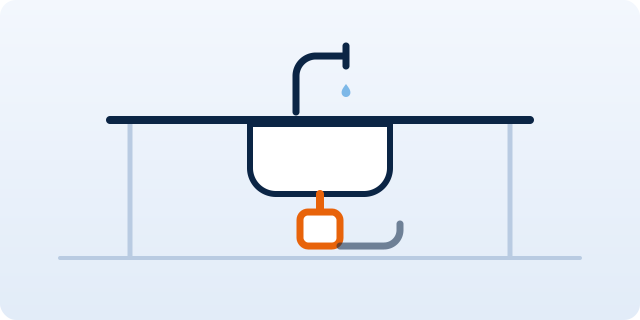
California has been on a ductless heat pump run for a few years now, pushed along by utility rebates and city electrification rules that favor a mini-split over a new gas furnace or wall heater. Most of that conversation is about the electric bill and the BTU sizing. Almost none of it is about the small copper line running out the wall next to the refrigerant lines — the condensate drain — even though it's the part most likely to cause a service call, and the part that's actually regulated as plumbing.
Where the water comes from
A mini-split's indoor head cools air by passing it over a cold evaporator coil. Humidity in that air condenses on the coil the same way it condenses on a glass of ice water, drips into a small pan built into the unit, and has to drain out continuously whenever the system is cooling. A single head in a humid California coastal home can produce several gallons a day during a hot, muggy stretch — not a lot at any one moment, but enough that a blocked drain backs up fast and drips straight out of the unit onto the wall or floor below it.
What California code actually requires
This is the part most homeowners — and some installers doing HVAC-only work without a plumbing license involved — get wrong. Under the California Mechanical Code, condensate from air-conditioning and cooling-coil equipment isn't allowed to just run onto the roof, into the yard, or straight into a sink drain. It has to be collected and discharged to an approved plumbing fixture or disposal area, and if it discharges into the drainage system, it must go through an indirect waste pipe — meaning it terminates over an approved receptor with an air gap (a minimum of about 1 inch between the pipe outlet and the flood-level rim), never a direct, sealed tie-in to a sanitary branch. That air gap exists for the same backflow-prevention reason as the air gap under your kitchen sink: it stops drain-side wastewater or sewer gas from ever being able to siphon back up into the condensate line and the unit above it.
The code also sets minimums for the line itself: not smaller than 3/4 inch, sloped at least 1/8 inch per foot toward the discharge point, and built from corrosion-resistant material. Approved discharge points include a laundry standpipe or janitor sink, an accessible inlet on a bathtub overflow, or a lavatory tailpiece serving the same conditioned space as the unit — not a random floor drain three rooms away, and not the storm drain. If your installer just zip-tied the condensate line to the refrigerant lines and let it drip onto a roof or into a planter, that's a common shortcut, but it isn't a code-compliant install, and it's exactly the kind of thing that surfaces at resale if an inspector traces the line.
Why the line clogs
Condensate lines are narrow — typically 3/8 to 5/8 inch inside the unit before stepping up to code-minimum size — sit wet almost constantly during cooling season, and run mostly in the dark inside a wall or attic. That combination is close to ideal for biofilm: a slimy microbial layer that builds on wet surfaces and gradually narrows a drain until it backs up. The mechanism isn't unique to mini-splits — a 2012 study by Schmidt, Attaway, Terzieva, Marshall, Steed, Salzberg, Hamoodi, Khan, Feigley and Michels published in Current Microbiology ran a full-scale HVAC test comparing aluminum and copper heat-exchanger coupons, the same metals used in evaporator coils, and found the aluminum coupons developed stable mixed bacterial and fungal biofilms exceeding 47,000 organisms per square centimeter within just four weeks of normal operation, while antimicrobial copper run in parallel stayed roughly 99.97% lower over the same period. That biofilm on the coil is exactly what seeds the condensate dripping into the drain pan below it — which is why a line that looked clean at installation can be visibly slimed and partially blocked well within a single cooling season, especially with the corrugated flexible tubing some installers use instead of smooth-wall PVC.
A clogged line doesn't just leak. Most mini-split heads have a float switch in the drain pan that shuts the unit down — or, on cheaper models, does nothing at all — once water backs up past a set level, so the first sign is often a head that stops cooling on a hot day, followed by a water stain on the drywall below it once the pan overflows.
Clearing a clogged line: what it costs
For a line that's still accessible — a straight run to an exterior termination, or one reachable from an attic or closet — clearing it is usually a $150–$350 service call: the same wet/dry vacuum or nitrogen-purge technique used to clear a clogged AC drain, applied to the smaller mini-split line. Where the line snakes through finished walls with no cleanout, the fix sometimes means cutting in an accessible cleanout tee at the low point so the next clog doesn't require opening drywall again — figure another $150–$400 for that added labor and material on top of the initial clearing.
When gravity won't work: condensate pumps
Not every mini-split head sits above an exterior wall or a convenient drain. A head mounted in an interior room, or on an upper floor with no nearby soil stack, often needs a small condensate pump — a miniature version of the sump pump used to lift basement or crawlspace water, sized for a few gallons a day instead of a flooding event. Installed, a condensate pump typically runs $300–$700, including the pump itself, tubing, an electrical tie-in, and routing the discharge to a code-approved receptor — a modest add versus the $800–$2,500+ range for a full sump pump system built to handle groundwater or storm inflow, since the equipment and duty cycle are in a completely different class. A condensate pump also has its own float switch and its own failure mode: the small check valve and impeller can gum up with the same biofilm that clogs the line itself, so a pump that's been silently running for a couple of years is worth a look during any HVAC service visit, not just when a head starts alarming.
Keeping the line clear
A few habits catch most problems before they cause water damage: flush the line with a cup of distilled white vinegar every few months during cooling season to slow biofilm growth without damaging plastic fittings; ask your installer for smooth-wall PVC or hard tubing rather than corrugated flexible drain hose, which traps debris at every ridge; and confirm at installation that the termination point is one of the code-approved receptors above, with a visible, inspectable air gap — not a line buried in a wall with no cleanout and no way to check it later.
If you're weighing a mini-split against a furnace, boiler, or gas wall heater for a California home, our heating system comparison guide and gas wall heater guide cover the upfront and running-cost tradeoffs. For the plumbing side of a new install — routing an indirect waste line correctly the first time — or a mini-split already dripping or shutting down on hot days, compare quotes from licensed plumbers in Los Angeles, San Diego, Sacramento and Oakland on Plumber Comparator, and request a free quote to get the drain line done right.
Need a plumber you can trust?
Tell us about the job — a licensed California plumber gets back to you with a real quote.
Get free quotes