Clogged Kitchen Sink in California: Causes, DIY Fixes, and When to Call a Plumber
For the big bills · $59California Homeowner Plumbing Pack33 chapters, read online: sewer line kit · slab leak and insurance claim kit with 3 letters · month-by-month maintenance calendar · Price Book (17 jobs, 145 cities) · Water Heater Kit. What's insideOne payment of $59 · instant access, receipt by email · for California homeowners
Get the pack · $59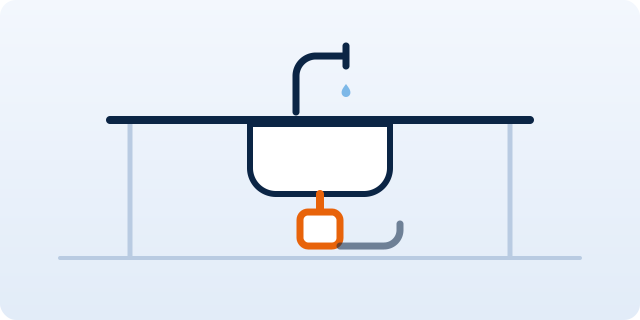
The kitchen sink is the drain that clogs most often, and it's almost never a mystery: it's grease. Understanding why kitchen drains block — and which DIY steps actually help versus make things worse — saves you both the plumber's bill and a ruined trap. Here's a practical, California-specific rundown.
Why kitchen sinks clog: it's the grease
Fats, oils and grease poured down a kitchen sink don't just "wash away." They cool, congeal, and bond to pipe walls, gradually narrowing the drain until it blocks. This isn't folk wisdom — it's chemistry. Research by X. He, J. Ducoste and colleagues, published in Environmental Science & Technology, showed that fats, oils and grease react with calcium in wastewater to form hardened, insoluble deposits — essentially a soap-like solid — that are a major cause of sewer blockages (see the study). The same process that clogs a city sewer clogs the pipe under your sink, just faster and on a smaller scale. Coffee grounds, starchy food scraps and — in homes with a disposal — fibrous peelings accelerate it.
What you can safely try yourself
Before calling anyone, in this order:
- Boiling water (for metal/older pipes) or very hot tap water can soften a fresh grease clog. Skip boiling water on PVC connections.
- Plunge with a cup plunger — seal the overflow or the second basin, and plunge firmly. This clears a lot of soft clogs.
- Clean the P-trap. Put a bucket underneath, unscrew the curved trap under the sink, and clear the gunk by hand. This is the single most effective DIY fix for a kitchen clog and requires no chemicals.
- A hand auger (drain snake) fed into the pipe past the trap clears clogs further down.
What to avoid: harsh chemical drain openers. They often don't dissolve a solidified grease plug, they sit in the trap where they can damage pipes and seals, and they make the job hazardous for whoever opens the pipe next. Our home remedies guide covers what works and what doesn't.
When it's time to call a plumber
Call in a pro when: the clog returns within days of clearing it, more than one fixture drains slowly at once (a sign the blockage is deeper in the line — see clogged drain vs main sewer line), water backs up into the other basin or the dishwasher, or you've cleared the trap and it's still blocked. A plumber uses a powered auger or, for greasy build-up along a whole line, hydro-jetting versus snaking to scour the pipe walls clean rather than just punching a hole through the clog.
What it costs in California
A straightforward kitchen drain clearing is one of the more affordable plumbing calls; a stubborn or deep clog that needs cabling from a cleanout, or jetting, costs more. Typical California ranges are on our drain cleaning cost page, and the drain cleaning cost guide explains what pushes a simple job into a bigger one. Beware suspiciously cheap "$49 drain special" ads — our drain special guide explains how those often become upsells.
Preventing the next clog
Since grease is the cause, prevention is simple: never pour cooking grease, oil or bacon fat down the sink — collect it in a can and bin it. Wipe greasy pans with a paper towel before washing, keep food scraps out of the drain (a disposal grinds, it doesn't make grease disappear), and run hot water after washing up. Do that and a kitchen clog becomes a rare event rather than a recurring bill. If yours keeps coming back despite good habits, that points to build-up deeper in the line — describe it on Plumber Comparator and request a free quote from a licensed plumber near you, whether in San Diego, Sacramento or the East Bay.
Related topics
These topics used to have their own pages; their key facts and figures are gathered here.
| Topic | In short |
|---|---|
| Grease-Clogged Kitchen Drains | Why grease poured down the kitchen sink hardens into pipe-blocking deposits even with hot water and soap, how plumbers clear FOG clogs (snaking vs hydro jetting), typical costs in California, and habits that keep grease out of your drain line. |
Grease-Clogged Kitchen Drains
Almost every stubborn kitchen drain clog has the same ingredient: grease. Bacon fat, frying oil, salad dressing, the fond rinsed off a roasting pan — it all goes down as a warm liquid and cools into a waxy solid somewhere in the line, usually just far enough downstream that a plunger and a bottle of drain cleaner cannot reach it. Grease clogs behave differently from hair or food-scrap clogs, and understanding why explains both what the fix costs and why the "hot water and dish soap" trick does not work.
- Snaking the kitchen branch line: typically $150–$400. Fast and effective for a soft, recent blockage, but it tends to bore a channel through hardened FOG rather than remove it.
- Hydro jetting: typically $350–$800 for a residential kitchen line. High-pressure water scours the deposit off the pipe wall back to bare pipe, which is the appropriate fix for saponified grease. See our hydro jetting cost guide and the comparison of jetting vs snaking.
- Camera inspection: often bundled with jetting; worth it if clogs recur, to confirm the line is clean and rule out a sagging or damaged pipe.
Study cited: doi:10.1021/es2001997
Need a plumber you can trust?
Tell us about the job — a licensed California plumber gets back to you with a real quote.
Get free quotes