Sewer Line Repair & Replacement in Santa Monica, CA
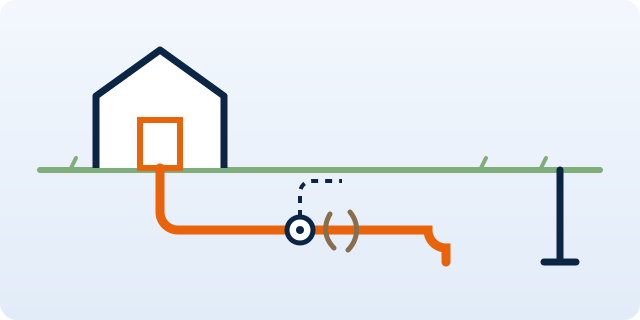
In Santa Monica, with homes developed from the 1920s onward, sewer repairs cluster in predictable places: clay and cast iron in the older districts, plastic in the newer ones crack at joints, sag into bellies, and let roots in. Whether the answer is a spot repair, lining or a full replacement depends on what the camera finds.
Statewide, sewer line repair & replacement typically runs $1,500–$25,000. In Santa Monica, licensed plumbers bill $100–$200 per hour with service-call fees of $75–$125 — flat-rate pricing is common for standard jobs, and the fee is usually credited when you approve the work. For the state-wide view, see the Sewer Line Repair & Replacement cost guide.
What Santa Monica's homes mean for sewer line repair & replacement
Santa Monica is a Los Angeles County city developed from the 1920s onward: prewar bungalows north of Montana, midcentury apartments and condos across the rest of the city. For drain and sewer work, the era is the diagnosis — clay and cast iron in the older districts, plastic in the newer ones come with known failure modes, and local crews quote them daily.
- The crawl spaces under Santa Monica's older homes are a plumbing blessing: supply, drain and gas lines stay reachable without opening concrete, which keeps repair bills down.
- Foundation bonus in Santa Monica's older homes: crawl spaces keep drain repairs accessible — what would be a concrete job elsewhere is often an afternoon under the house here.
What moves sewer line repair & replacement pricing
- Repair vs full replacement
- Trenchless feasibility (pipe must hold its shape)
- Depth and surface above (lawn vs concrete)
- Access: crawl spaces under Santa Monica's older homes keep labor down
Need a plumber you can trust?
Two minutes to describe the problem, and a licensed plumber serving Santa Monica calls you back to price your sewer line repair & replacement job. Free, no strings.
Get free quotesFrequently asked questions
Santa Monica homes were built across many decades — what does that mean for their drains?
Homes of that era typically have clay and cast iron in the older districts, plastic in the newer ones. Clay and cast iron develop root intrusion and bellies with age, so recurring clogs justify a camera inspection rather than repeat cabling.
Trenchless vs traditional excavation — which should I choose?
Trenchless (bursting or lining) wins when the existing pipe still holds its shape and you'd otherwise dig up hardscape. Open trench wins for shallow lines under lawn, badly collapsed pipe, or grade corrections. A camera inspection decides — get bids for both when possible.
Related services in Santa Monica
 Sewer Camera Inspection
 Hydro Jetting
 Drain Cleaning
Go deeper
- Trenchless Sewer Line Replacement: Pipe Bursting vs CIPP vs Dig
- Cast Iron Drain Pipe Replacement: Signs of Failure and Cost in California Homes