Sewer Camera Inspection in Hayward, CA
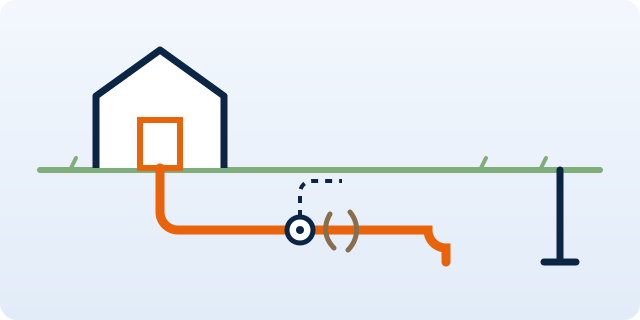
With Hayward homes built out mostly in the 1950s, a camera inspection is the smartest few hundred dollars a homeowner can spend before approving sewer work: it tells you whether cast-iron drains and clay sewer laterals have real defects or just needed a cleaning.
The honest number: $150–$600 covers most sewer camera inspection work in California, with Hayward labor at $150–$250/hr and $90–$150 to get a truck to the door. What moves your quote inside that range is scope — which is why itemized bids beat phone estimates. For the state-wide view, see the Sewer Camera Inspection cost guide.
What Hayward's homes mean for sewer camera inspection
Hayward is a Alameda County city built out mostly in the 1950s: postwar tracts on the flats and older bungalows near downtown. For drain and sewer work, the era is the diagnosis — cast-iron drains and clay sewer laterals come with known failure modes, and local crews quote them daily.
- The crawl spaces under Hayward's older homes are a plumbing blessing: supply, drain and gas lines stay reachable without opening concrete, which keeps repair bills down.
- Era check for Hayward: homes went up built out mostly in the 1950s, so expect cast-iron drains and clay sewer laterals — that generation of pipe defines which drain repairs are routine here and which justify a camera first.
What moves sewer camera inspection pricing
- Access through cleanout vs pulled toilet
- Stand-alone vs bundled with cleaning
- Locating service (marking depth/position) sometimes extra
- Access: slab construction in Hayward can add concrete or reroute work
Need a plumber you can trust?
One form, no phone tag: tell us about your sewer camera inspection problem and a licensed plumber covering Hayward calls you back with an actual number.
Get free quotesFrequently asked questions
Hayward homes were built in the 1940s and 1950s — what does that mean for their drains?
Homes of that era typically have cast-iron drains and clay sewer laterals. Clay and cast iron develop root intrusion and bellies with age, so recurring clogs justify a camera inspection rather than repeat cabling.
What does the camera actually find?
The classics: root intrusion at clay pipe joints, grease buildup, bellies (sags holding water), offset joints from soil movement, and cracked or collapsed sections. The operator should show you live and give you a recording.
Related services in Hayward
 Drain Cleaning
 Hydro Jetting
 Sewer Line Repair & Replacement
Go deeper
- Plumbing Inspection Before Buying a Home: What to Check and Why
- Trenchless Sewer Line Replacement: Pipe Bursting vs CIPP vs Dig