Sewer Line Repair & Replacement in Garden Grove, CA
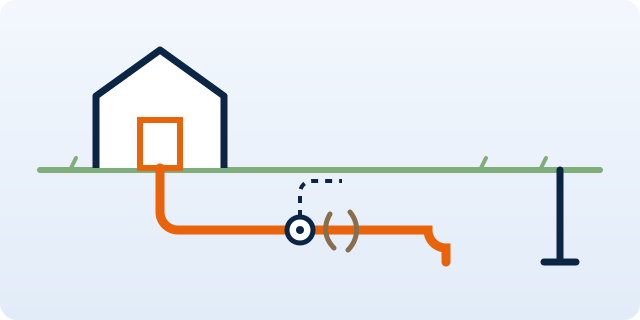
A failed lateral is the repair Garden Grove homeowners fear for good reason: five figures is possible — and so is a spot fix at a tenth of that. The camera decides which, and the odds are set by the stock: single-story postwar tracts, street after street, meaning cast-iron drains and clay sewer laterals on many blocks.
The honest number: $1,500–$25,000 covers most sewer line repair & replacement work in California, with Garden Grove labor at $105–$200/hr and $75–$125 to get a truck to the door. What moves your quote inside that range is scope — which is why itemized bids beat phone estimates. For the state-wide view, see the Sewer Line Repair & Replacement cost guide.
What Garden Grove's homes mean for sewer line repair & replacement
Garden Grove is a Orange County city built almost entirely in the 1950s: single-story postwar tracts, street after street. For drain and sewer work, the era is the diagnosis — cast-iron drains and clay sewer laterals come with known failure modes, and local crews quote them daily.
- Slab-on-grade construction means under-floor lines are entombed in concrete — which is why reroutes and trenchless methods get quoted so often in Garden Grove.
- With a mix of raised foundations and early slab-on-grade, under-floor drain problems in Garden Grove get solved around the concrete: cleanout access, cameras and trenchless techniques do the heavy lifting.
What moves sewer line repair & replacement pricing
- Depth and surface above (lawn vs concrete)
- Permit and city inspection requirements
- Public right-of-way portion — sometimes needs a specialized contractor
- Access: slab construction in Garden Grove can add concrete or reroute work
Need a plumber you can trust?
One form, no phone tag: tell us about your sewer line repair & replacement problem and a licensed plumber covering Garden Grove calls you back with an actual number.
Get free quotesFrequently asked questions
Garden Grove homes were built in the 1940s and 1950s — what does that mean for their drains?
Homes of that era typically have cast-iron drains and clay sewer laterals. Clay and cast iron develop root intrusion and bellies with age, so recurring clogs justify a camera inspection rather than repeat cabling.
Trenchless vs traditional excavation — which should I choose?
Trenchless (bursting or lining) wins when the existing pipe still holds its shape and you'd otherwise dig up hardscape. Open trench wins for shallow lines under lawn, badly collapsed pipe, or grade corrections. A camera inspection decides — get bids for both when possible.
Related services in Garden Grove
 Sewer Camera Inspection
 Hydro Jetting
 Drain Cleaning
Go deeper
- Trenchless Sewer Line Replacement: Pipe Bursting vs CIPP vs Dig
- Cast Iron Drain Pipe Replacement: Signs of Failure and Cost in California Homes