Septic to Sewer Conversion Cost in California: Connection Fees, Abandonment Rules and Real Numbers
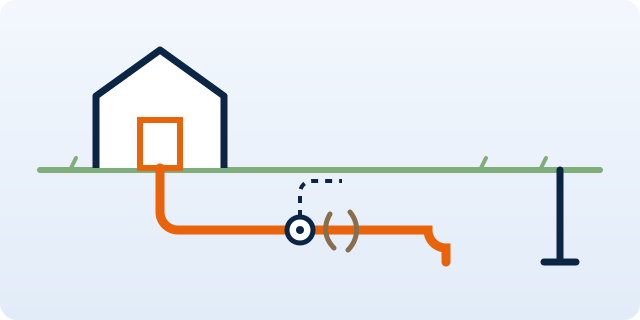
Thousands of California homes still run on septic systems inside neighborhoods that municipal sewer lines have long since reached. Converting is one of the more expensive projects a homeowner can face — routinely a five-figure job — yet it's often either mandatory (when a septic system fails and a sewer main is available) or financially sensible (when a failing system would cost nearly as much to rebuild). This guide breaks the project into its real components, because "sewer connection" is actually four separate bills.
The four costs that make up a conversion
- Connection and capacity fees: $2,000–$20,000+. The fee the sewer district charges just for the right to connect, sometimes called a capacity or facilities charge. This is the wildest variable in California — some districts charge a couple thousand dollars, while high-growth or coastal districts can exceed twenty thousand. It's set by the district, not the plumber, and no contractor can negotiate it down.
- The new sewer lateral: $3,000–$15,000. Trenching and piping from the house to the main in the street, including street cut, traffic control, and pavement restoration where the main runs under asphalt. Depth of the main, distance, and whether trenchless methods are possible drive the spread — the same factors as in our trenchless sewer guide. Note that many cities will also require the lateral to pass inspection standards similar to those in our sewer lateral inspection guide.
- Re-routing house plumbing: $500–$3,000. The house drain currently points at the septic tank; it usually needs to be intercepted and redirected toward the new lateral, occasionally with a sewage ejector pump if the main is higher than the lowest drain.
- Legal septic abandonment: $500–$2,500. California health codes don't let you simply walk away from a tank. The tank must be pumped by a licensed hauler, then crushed or filled with sand, gravel, or slurry, with a permit and inspection. Pumping alone runs $300–$700, as covered in our septic pumping guide.
Realistic all-in totals: $8,000–$40,000, with most straightforward suburban conversions landing in the $10,000–$25,000 band. Get the fee schedule from your sewer district first — it can single-handedly decide whether the project makes sense this year.
When conversion stops being optional
Most California counties require connection when a septic system fails and a public sewer is available within a set distance (often 200 feet), and many prohibit rebuilding a failed leach field in that situation. Some regions — the Los Osos basin, parts of Malibu, and various groundwater-sensitive areas — have moved to phase out septic systems entirely under Regional Water Quality Control Board orders. The science motivating those policies is decades old: Marylynn Yates' influential review "Septic tank density and ground-water contamination" (Ground Water, 1985) documented how clustered septic systems contaminate the aquifers beneath them, identifying septic discharge as the most frequently reported cause of groundwater contamination in the United States (study on Google Scholar). Dense neighborhoods on septic are exactly the case regulators worry about — and exactly where sewer mains get extended.
Planning the project well
- Sequence the approvals: sewer district connection permit first, then city/county plumbing and encroachment permits, then the septic abandonment permit from environmental health. Our California plumbing permits guide explains who issues what.
- Camera the existing house drain before trenching — if the drain under the house is failing cast iron, it's far cheaper to address while the yard is already open. A camera inspection ($150–$500) is trivial insurance on a five-figure project.
- Ask about financing and assessments: some districts offer payment plans or add the connection fee to property taxes; a few sewer-extension projects are financed by neighborhood assessment districts.
- Bid it as one package — a contractor who handles lateral, re-route, and abandonment avoids the gap where two trades each assume the other pulled the permit.
Conversion quotes vary enormously between contractors because excavation efficiency varies. Describe your distance to the main and lot layout, then request a free quote — sewer contractors in Escondido, Chico, and across California can usually give a tight estimate after one site visit.
Need a plumber you can trust?
Tell us about the job — a licensed California plumber gets back to you with a real quote.
Get free quotes